
What to pack for your hospital birth
- Jun 30, 2015
- 6 min read
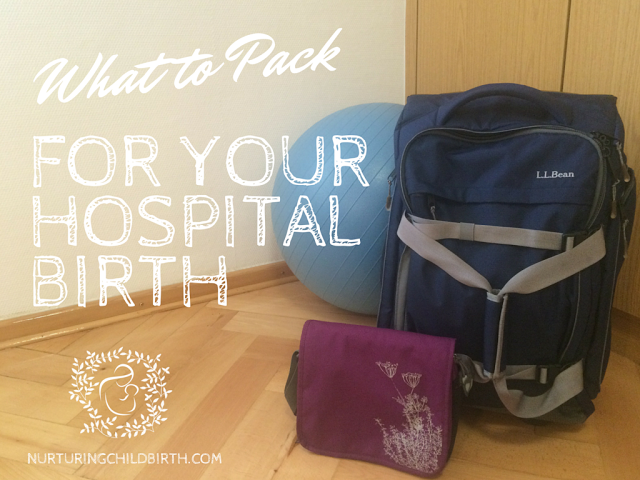
What should I pack in my birth bag? This is a question that every expecting mom has at some point during her pregnancy. If you are planning a home birth, your birth supplies "check-list" might look a little different (although, I always recommend moms pack a small hospital bag for the rare case a transfer is needed). If you are planning to have your baby at the hospital, there are some items that you will definitely want to take along. The following list is merely a collection of ideas and items can be added or taken out depending on what you need/want for your birth experience.
When you take your hospital tour (and yes, you should do this), bring a pad of paper and make a note of what is provided for you there (hair dryer, birth ball, microwave, speaker dock, etc).
On to the packing...
Important miscellaneous items to pack:
Childbirth Education class book and handouts + additional books/resources that you find helpful
Birth Plan: Bring at least 3 copies
Notebook or pad of paper + pen: Offers a place to jot down notes from your caregiver or nurse, notes about labor, etc
Insurance information/card
Wallet (with ID card)
Support sheet: During your pregnancy, I find it very beneficial to create a support sheet containing contact information for various people and services that you may need during pregnancy, labor, and after the baby is born. For example, a contact for lactation support (counselor, center, warm line, etc), doula's contact info, pediatrician's info, phone number for your favorite take-out restaurants, contact info for close friends and family, etc. *Keep an eye out for a post in the near future that will cover this in a little more detail and provide a template for you to use.
What to pack for LABOR:
Birth ball: Check and see if your hospital provides birth balls (also called stability balls) for you to use. Sometimes they will only have a handful, so it might be a good idea to throw one in your car just in case. If you don't have one already, buy one now so that you can use it during your pregnancy. These also come in handy after baby has been born not only for postpartum exercises, but also as a tool for soothing your fussy baby ;)
Rebozo: A really helpful labor tool. Read more about it here
Massage tools: There are tons of massage tools on the market these days so try a bunch out and find what works best for you. Here are some that I really like (all found on Amazon):
Tennis balls! Easy, cheap, effective
Massage Lotion or Oil: Look for one that is unscented and test out ahead of time to make sure that you like it.
Herbal Rice Socks: These are so easy to make and provide much needed relief during labor. Fill a sock with rice, add herbs (lavendar is a great one to add), tie it off and voila! You can heat it up in the microwave or put it in the freezer.
Heat Pad (same purpose as rice sock): can be found here
Check to see if your hospital has a microwave available for you to use during labor. Often times your nurse may be willing to heat it up for you. You can also bring a small crockpot with you so that you always have a heat pad on hand and ready to use.
Essential Oils: A mom's scent preference often changes throughout her labor so it is a good idea to have a variety of oils on hand if you plan to use them. I like the cotton ball technique (put a few drops of EO on a cotton ball and then seal in a plastic baggy) because it allows you the ability to have access to an oil's scent without filling the entire room. You may also want to have some oils with you that you can add to your massage lotion/oil when desired. A hydrosol is also a good option for setting the tone of the room during labor.
Chapstick: All of the breathing during labor can dry out a mom's lips very quickly. Bring a couple of chapsticks and have them handy.
Music: You can bring your phone or ipod with headphones and/or a portable speaker. If you anticipate using music during your labor, make a playlist ahead of time so that you are not having to search for your favorites during labor.
Your own pillow + extra pillowcase: You will want this!
Your own blanket: Hospital blankets are often stiff and uncomfortable. Having one of your own is not only more comfortable, but it also helps to make your hospital room a little more like home.
Sports bra or bathing suit top for tub/shower use
Hair ties/clips/headbands to keep the hair out of your face
Slippers or gripper socks
Water bottle with straw top: I like having two so that I can have one for water and one for tea/juice/coconut water/broth. The reason for the straw top is so that it is easy to drink no matter what position you find yourself in.
Snacks: Think easy to digest foods - nuts, dried fruits (coconut rolled dates are a great choice), easy to eat fruit, nut butters (you can get these in small packets), whole food bars, honey sticks, broth, coconut water, tea bags, whole grain crackers, etc.
Optional add-ons:
Scripture cards
Arnica gel to help with muscle pain/tension.
Mints: Peppermints may help with mom's nausea and also come in really handy for the birth partner (no mom wants stinky breath by her face!)
Your own labor gown: Some women prefer having their own gown which is often more comfortable and provides one more way to have ownership of your hospital birth and feel a little less like a "patient." You can find these on etsy and other online retailers.
Flip-flops for the shower
What to pack for AFTER THE BIRTH:
Comfortable robe
Nursing bras or tanks
Nursing pads (you can find a bunch of reusable organic cotton options here)
Comfortable pajamas: Button down pajamas are the most convenient for nursing.
Loose fitting pants and shirts
Underwear options: Yes, there will be a lot of flow after the baby is born. Most hospitals hand out the infamous mesh panties and then give you huge pads to put inside. Personally, I found these extremely uncomfortable but some people don't mind them. If you plan to use your own underwear, do yourself a favor and go buy some good ol' granny panties. You will want them to be comfortable, breathable, and able to hold a large pad. Don't bring anything that you would not want stained or ruined.
Maxi pads and/or adult absorbancy protection underwear: Stock up on some heavy flow maxi pads for both hospital and home. Another option (which might sound ridiculous to you at the moment) is to get some adult absorbancy protection underwear, aka adult diapers. It might sound silly, but these come in super handy and are an easy wear em' and toss em' option. You can find some here.
Toothbrush and toothpaste
Hairbrush and any other styling tools: Check to see if your hospital provides a hair dryer in the room.
Facewash, body wash, shampoo/conditioner, deodorant: Trust me, you will want to take a shower and it will feel glorious!
Unscented lotion or body oil: The hospital can be very dry. I suggest unscented so that you are not messing with or masking your natural smell, which is important in your bonding and nursing time with baby.
Any makeup you may want to have
Socks or slippers
Outfit for going home: Don't forget shoes and any necessary outerwear!
Tablet/laptop/phone + chargers
Camera and charger
And don't forget clothing and toiletries for dad/partner!
Some additional add-ons for AFTER BABY:
After-Ease herbal tincture
Sitz-bath spray: healing herbal spray for perineal discomfort after the birth
Lactation support tea: tea bags are the easiest option when in the hospital (versus loose leaf)
What to pack for BABY:
2-3 outfits: sleepers are the easiest
Receiving blanket(s)
Burp cloth(s)
Going home outfit
Car seat: Make sure that you have this installed correctly ahead of time.
Additional clothing for outdoors (if needed): hat, blanket, etc
Diapers and wipes: Optional. Hospitals provide all of the newborn diapers and wipes that you will need. However, if you are particular about a certain brand/type you will need to bring those along with you.
Bath supplies: If you plan to bathe your baby at the hospital, you might want to bring along your own soap if you have a preference.
How to pack:
As you are laying everything out and deciding on how to pack it all, remember that you want the transition to the hospital to be as easy as possible. Shy away from packing multiple duffle bags that are hard to carry (and keep track of), and try to consolidate as much as possible. A roller bag is a great choice in that it is easy to transport and has plenty of space to carry and separate out items.
Once again, this is just a collection of ideas and it is meant to serve as a launching pad as you begin your own packing. Keep your bag accessible and add items over time as you begin to collect your supplies and decide what is important for you to have at your birth. Have some great ideas to add? Please share in the comments below!


Comments